What Is a Half-Hot Outlet? (And Why It Confuses Everyone)
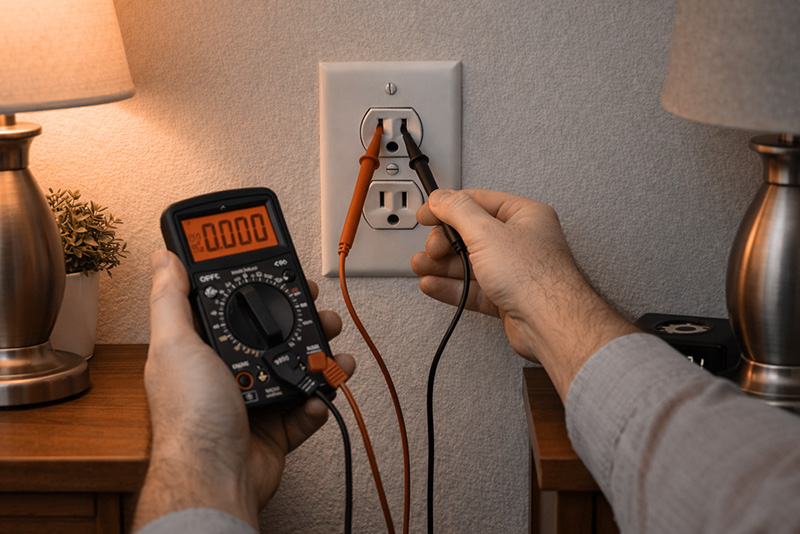
Testing a half-hot outlet to determine which plug in the outlet is controlled by the switch.

If you’ve ever plugged a lamp into an outlet, flipped the wall switch, and found that only one plug on the outlet is controlled by the switch — you’ve encountered a half-hot outlet.

Most people don’t know the term.
They just know something feels broken.

The good news: it’s not broken at all.
It’s just an outdated design that doesn’t make much sense anymore.


What a Half-Hot Outlet Actually Is

A half-hot outlet is a standard wall outlet where:

  • One plug is always on

  • The other plug is controlled by a wall switch

You can usually tell which is which by trial and error — or by noticing that only one lamp turns on when you flip the switch.

This setup was common in older homes and apartments, especially in rooms without overhead lighting.


Why Half-Hot Outlets Exist

Decades ago, builders used half-hot outlets as a cheaper alternative to installing ceiling lights.

The idea was simple:

  • Plug a lamp into the switched half

  • Use the wall switch to control your room lighting

On paper, it worked.

In reality, it assumed:

  • The lamp would stay in one place

  • Furniture layouts wouldn’t change

  • People wouldn’t need multiple light sources

None of that matches how people live today.


Why Half-Hot Outlets Are So Confusing

Half-hot outlets create problems because they’re invisible.

There’s:

  • No label

  • No indicator

  • No obvious difference between the two plugs

So people experience things like:

  • One lamp turns on, while another doesn’t

  • A phone charger works in one plug but not the other

  • The switch “controls nothing”

  • Outlets seem randomly broken

In apartments, this confusion often lasts for years.


Why They’re Especially Frustrating in Bedrooms and Living Rooms

Half-hot outlets are most annoying in rooms where lighting matters most.

In bedrooms:

  • There’s often no overhead light

  • The switch controls one random outlet

  • Bedside lamps may not be connected

In living rooms:

  • Lamps are spread across the space

  • Only one plug in one outlet responds to the switch

  • Lighting feels uneven and unfinished

The wiring dictates the room — instead of the other way around.


Why Rewiring Isn’t the Right Fix

Technically, half-hot outlets can be rewired.

But in practice:

  • It requires an electrician

  • Walls may need to be opened

  • It’s expensive

  • It’s usually not allowed in rentals

Most people simply live with the frustration.


The Modern Workaround (Without Rewiring)

The key is to stop thinking in terms of which outlet is controlled by the wall switch.

Instead, think about:

  • How you want the room to respond when you turn lights on

  • Where lamps actually make sense visually

  • How many lights should turn on together

A modern approach lets you:

  • Keep your outlets as they are

  • Place lamps anywhere

  • Synchronize lighting from a single action

  • Avoid changing the room’s wiring

The result feels intentional — even in older spaces.


Half-Hot Outlets Aren’t Broken — They’re Just Outdated

If a half-hot outlet has ever made you question your sanity, you’re not alone.

It’s a relic of older building practices colliding with modern living.

The good news is you don’t need to rewire your home to fix how the lighting functions and feels.

If you want to control and synchronize your lighting without rewiring, smart bulbs, or WiFi, you can reserve PSYNQ for $1 and lock in the VIP $40 price (retail ~$60): presale.psynq.com

Why Apartments Still Rely on Switch-Controlled Outlets (and How to Work Around Them)

Photo of a stylish apartment living room illuminated by a single floor lamp plugged into a switch controlled outlet.

If you’ve ever moved into an apartment and wondered why the wall switch controls a random outlet—or seemingly nothing at all—you’re not alone.

This setup frustrates renters every day, yet it continues to appear in apartments across the country.

So why do apartments still rely on switch-controlled outlets instead of proper overhead lighting?
And more importantly—what can you do about it?


Why Switch-Controlled Outlets Exist in the First Place

Most apartments built before the last few decades were designed around a simple assumpton:

“The tenant will add lamps.”

Instead of installing ceiling lights in every room, builders used a cheaper alternative:

  • Wire a wall switch

  • Connect it to a single outlet

  • Expect a lamp to be plugged into the switch controlled outlet

This approach saved time and money during construction—and it technically met building codes at the time.

Unfortunately, it also created decades of lighting frustration.


Why This System No Longer Works for Modern Living

What made sense decades ago doesn’t fit how people live today.

Modern renters want to:

  • Rearrange furniture freely

  • Place lamps where they actually look good

  • Light rooms evenly

  • Avoid walking into dark spaces

  • Turn on multiple lamps at once

But switch-controlled outlets lock you into:

  • One specific outlet

  • One lamp

  • One awkward lighting layout

As soon as you move the furniture, the switch stops making sense.


Common Problems Renters Experience

If your apartment uses switch-controlled outlets, you’ve probably experienced at least one of these:

  • The switch controls the “wrong” outlet

  • Only one lamp turns on

  • Half of an outlet works, half doesn’t

  • No overhead lighting at all

  • Lamps don’t turn on together

  • Lighting feels uneven and dim

Most people assume the only fix is rewiring—which renters can’t do.


Why Rewiring Isn’t the Answer for Renters

Even if your landlord allowed it, rewiring would mean:

  • Opening walls

  • Hiring an electrician

  • Dealing with permits

  • Patching drywall

  • Restoring everything when you move

It’s expensive, disruptive, and unrealistic for a rental.

That’s why most renters just live with bad lighting for years.


How Renters Can Work Around Switch-Controlled Outlets

The key is changing how the switch is used.

Instead of thinking of the switch as something that must power a lamp directly, you can think of it as a trigger—a simple on/off signal.

When used this way, you can:

  • Control outlets anywhere in the room

  • Sync multiple lamps to one switch

  • Place lamps where they make sense visually

  • Create even, whole-room lighting

  • Avoid rewiring entirely

This approach lets renters take control without modifying the apartment.


Lighting Should Adapt to You—Not the Building

Switch-controlled outlets aren’t going away anytime soon, especially in apartments and older homes.

But that doesn’t mean you’re stuck with poor lighting.

With renter-friendly, plug-in solutions, you can work around outdated wiring and make your space feel intentional, bright, and comfortable—no matter how it was built.

If you want to control multiple lamps from one switch and fix bad outlet placement without rewiring, reserve PSYNQ for $1 and lock in the VIP $40 price (retail ~$60): presale.psynq.com