Why I Created PSYNQ: A Simple Fix for an Overcomplicated Smart-Home World

Dimly lit couch with only one lamp on next to it.

I didn’t set out to reinvent lighting.
I just wanted my rooms to work the way I wanted them to.

But like most people, I kept running into the same problems:

  • The wall switch controlled the wrong outlet

  • I couldn’t turn on lamps together

  • My furniture layout didn’t match the room’s wiring

  • Smart bulbs made everything more complicated

  • Every fix required rewiring or an app

At some point, I realized:
It shouldn’t be this hard to control a lamp.


Rooms Are Designed for Builders, Not for the People Who Live There

Older homes weren’t built with today’s lifestyles in mind.
Apartments don’t allow tenants to rewire their outlets.
Renters can’t change switches or outlets.
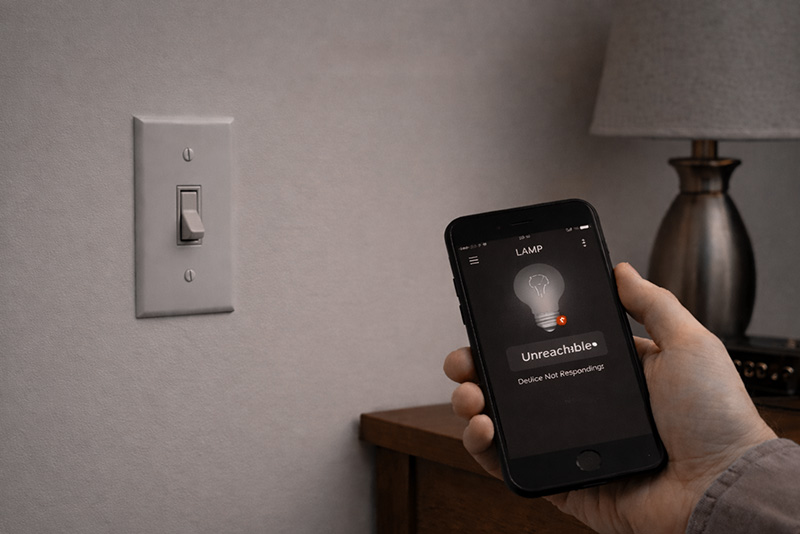
Smart-home lighting requires WiFi, accounts, firmware updates, and constant troubleshooting.

The more “smart” the solutions got, the more frustrating they became.

I wanted something different:

  • No rewiring

  • No WiFi

  • No apps

  • No accounts

  • No smart bulbs

  • No passwords
  • No electrician required

Just a simple way to decide which outlet the switch controls and make lighting feel consistent again.


PSYNQ Started as a Personal Fix

The idea wasn’t born in a lab.
It started in a normal home with normal lighting problems.

I wanted:

  • Multiple lamps to turn on together

  • My switches to control the outlets I chose

  • Flexibility to rearrange furniture

  • A solution that would work in any home, old or new

After trying smart bulbs, smart plugs, and wiring hacks, I still didn’t have a solution that felt right.

So PSYNQ began as a DIY workaround—a simple transmitter + receiver approach to “redirect” switch control to any outlet in the room.

It solved the problem immediately.


Then I Realized: Everyone Has This Problem

Friends. Family. Neighbors. Renters. Homeowners.
Every time someone walked into a room and flipped a switch that controlled nothing, they laughed and said:

“Oh my gosh — my house does this too.”

That’s when I knew PSYNQ wasn’t just for me.


Lighting Should Be Simple, Reliable, and Yours to Control

PSYNQ is intentionally low-tech:

  • No software

  • No login

  • No WiFi

  • No ecosystem to manage

  • No complicated setup

  • Works instantly

  • Works in apartments

  • Works in older homes

  • Works even if you rearrange the room

It puts you back in control of your lighting, not the builder who wired your home decades ago.


We’re Getting Close — And You Can Join Early

PSYNQ isn’t for sale yet, but early supporters can reserve:

💡A VIP price discount: $40 (retail ~$60) by placing a $1 deposit now at presale.psynq.com

If you’ve ever wished your lighting “just worked,” I built this for you.

5 Lighting Problems Every Apartment Dweller Understands (and Easy Fixes)

Dimly LIt Apartment Bedroom

If you live in an apartment, you already know one universal truth:

The lighting is rarely good.

Maybe the switch controls the wrong outlet.
Maybe the room has no overhead light.
Maybe your only bright corner is where you don’t want to put furniture.

Apartment lighting is an odd mix of limitations, outdated wiring, and decisions made decades before you moved in.

Here are the five most common apartment lighting frustrations—and how to fix each one without calling maintenance, rewiring anything, or investing in an expensive smart-home setup.


1. The Switch Controls the Wrong Outlet

You flip the switch near the door…
…and a lamp across the room turns on.
Or worse—nothing turns on.

This happens because many rentals use a single “half-hot” outlet as a substitute for overhead lighting. Unfortunately, the builder chose whichever outlet was easiest—not the one you want.

Easy fix:

Use the outlet the switch controls as your power signal source, then route that control to a lamp in a better location using a plug-in control system (no wiring required).


2. There’s No Overhead Lighting at All

Bedrooms and living rooms in older apartments often have zero ceiling lights.

Instead, the builder expects you to light the entire room with lamps.
And if the switch doesn’t control the right outlet… you’re walking into a dark room every night.

Easy fix:

Place one lamp near the switch-controlled outlet to act as your “entrance light,” and place additional lamps around the room that respond to that same switch using a plug-in syncing system.


3. One Lamp Is Never Enough (and They Don’t Turn On Together)

You set up two or three lamps to brighten your space—but:

  • They’re on different switches

  • They’re on different outlets

  • You must walk around the room turning them on one by one

This breaks the whole idea of creating a cozy, evenly lit room.

Easy fix:

Use a system that triggers multiple lamps from a single switch.
Synchronize your lamps so that when you turn one lamp on, other lamps turn on at the same time.
This gives you “whole-room lighting” without hardwired fixtures or smart bulbs.


4. Furniture Placement Is Limited by the Switch Outlet

You finally find the perfect place for your couch, desk, or bed…
…but now your lamp is no longer near the switch-controlled outlet.

So you have to choose between:

  • The layout you want

  • The lighting you need

Easy fix:

Use the switched outlet only as a signal, not the lamp’s actual power source.
This lets you put lamps near whichever outlet you want, regardless of how the room was wired.


5. Smart Bulbs Aren’t a Great Solution for Rentals

On paper, smart bulbs look like the answer.
In reality, they’re often a headache:

  • They require WiFi

  • They break scenes when someone uses the physical switch

  • They disconnect when routers reset

  • They need apps, accounts, updates

  • They cost way more than simple bulbs

And if you move?
You’re reinstalling and reconfiguring everything again.

Easy fix:

A simple plug-in control system lets you keep your normal bulbs, normal lamps, and normal switches—with none of the smart-home overhead.


Lighting Should Work the Way You Want—Not the Way the Building Was Wired

Apartment lighting frustrations are incredibly common—but they’re also fixable without:

  • Rewiring

  • Drilling

  • Permission from your landlord

  • Expensive smart-home gear

If you want to take control of your lighting setup and create a room that actually works for you, you can now do that with simple, renter-friendly tools.

Reserve PSYNQ at the VIP $40 price with a $1 deposit (retail ~$60): presale.psynq.com

Why Does My Wall Switch Control the Wrong Outlet? (And How to Fix It Without Rewiring)

Wall switch controlling the wrong outlet in a home office.

If you’ve ever flipped a light switch and watched a completely unexpected outlet turn on, you’re not alone.
This is one of the most common electrical frustrations in American homes — especially in bedrooms, apartments, and older living spaces with no overhead lighting.

But here’s the good news:
You can fix this problem without rewiring, without hiring an electrician, and without touching your breaker panel.

Let’s break down why this happens… and the easiest ways to solve it.


Why Does a Wall Switch Control the “Wrong” Outlet?

There are a few reasons this happens, and most of them have nothing to do with anything you did.


1. Homes Without Overhead Lighting (Very Common)

Many homes — especially older ones or apartments — were built with no ceiling lights.
To give you some way to turn on a lamp when you enter the room, builders added:

  • One half-hot outlet (only the top or bottom receptacle is switch-controlled), or

  • One single outlet on the entire wall that responds to the switch

Problem is… the outlet they chose might not be the one you actually use.


2. Furniture Layout Changes Everything

Let’s say the builder put the switched outlet on the left wall.
But you moved your bed or couch to the right wall.

Now:

  • The switch no longer controls the outlet you want

  • Your lamp turns on across the room

  • Or nothing turns on at all

This is the most common scenario in rentals.


3. Previous Owners Rewired Half the Room (or Just One Outlet)

Sometimes the previous homeowner:

  • Removed a switched outlet

  • Changed which half was controlled

  • Added or replaced outlets incorrectly

  • Upgraded part of the room but not all of it

You inherit whatever wiring choices they made.


4. Builders Sometimes Choose the “Easiest” Outlet to Wire

Not the best one.
Not the logical one.
Just the one closest to the switch or easiest to reach in the wall.

This leads to baffling setups like:

  • Switch by the door → controls outlet behind the sofa

  • Switch in hallway → controls bedroom outlet

  • Switch controls only the top plug

  • Switch controls only the bottom plug

You’re not imagining it — it’s wild.


Traditional Fixes (And Why Most People Can’t Use Them)

If you search online, you’ll see suggestions like:

  • “Hire an electrician.”

  • “Rewire the outlet.”

  • “Cut open the drywall.”

  • “Add new switch wires.”

These options cost $200–$1000+ and are not allowed in rentals.

That’s why most people simply live with the problem…
and keep walking into a dark room.


A No-Rewiring, Renter-Friendly Fix

If you want a simpler, plug-in solution, here’s the modern workaround:

Use the switched outlet to control any other outlet in the room.

This is exactly why I created PSYNQ — a plug-and-play device that lets you:

  • Move switch control to any outlet

  • Sync multiple lamps to the same switch

  • Use one lamp to control multiple other lamps
  • Fix bad outlet placements instantly

  • Add switch control to dark corners

  • Get lighting control without WiFi or rewiring

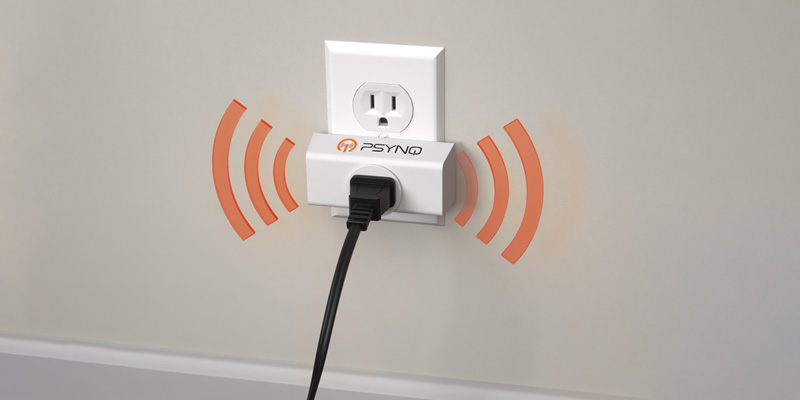
You simply plug the transmitter into the switch-controlled outlet…
…plug your lamp or device into the receiver…
…and the wall switch now controls THAT outlet instead.

No wiring.
No apps.
No accounts.
No tools.

If you want early access and the VIP $40 prelaunch price (retail ~$60), you can reserve one for $1 at presale.psynq.com.


When Should You Use a System Like This?

Here are the most common scenarios:

✔ Bedroom without ceiling lights

You want the switch to control the outlet by your nightstand, not the random outlet across the room.

✔ Living room furniture doesn’t match the builder’s outlet choices

Switch controls the wrong wall? Fixable instantly.

✔ Rental unit where you can’t rewire

You need a temporary but reliable solution.

✔ Home office setup

Want your desk lamp to respond to the wall switch? Easy.

✔ Home theater rooms

Sync multiple lamps to one switch for ambience.


Final Thoughts: You’re Not Crazy — Your House Wiring Is

If your wall switch is controlling the wrong outlet, you’re dealing with a very common, very fixable problem.

You don’t need an electrician.
You don’t need rewiring.
You don’t need smart bulbs or a smart home hub.

You just need a way to take control of your outlets again.

Reserve the VIP $40 prelaunch price for $1 and get notified when PSYNQ launches: presale.psynq.com


Cellular Time Warp

Person holding smart Phone

Tell me if this sounds familiar: You’re getting up to start your day and wondering what to wear. You want to dress appropriately for the weather so you grab your cell phone to check your weather app. Oh look, you’ve got 3 new emails, 7 text messages, and a handful of social media notifications. Twenty minutes later you realize you need to get going, so you put your cell phone down and head to the shower. Wait, after all that you didn’t even remember to check the forecast. 

It all started off innocently enough. Smart phones were high tech and offered lots of handy functions and capabilities that you could take with you wherever you go. Just think of the time savings and convenience! Eighteen years later and we’re all addicted to some extent. Everyone loves their cell phones but hates them at the same time.

How much of a problem have our cell phones become? Enough of a problem that businesses have popped up to help us deal with them. There are apps like aro that are designed to encourage you to spend less time on your phone. There’s a device called Brick that helps you focus and be present by temporarily disabling distracting apps on your phone. A Google search for “digital detox” provides over 89 million results. 

Clearly there is a problem. So why would you want to use your cell phone to control even more of your life? I wouldn’t. I really can’t afford to waste 20 minutes every time I want to turn the lights on or off.

PSYNQ Demo

It’s been a long time coming, but the prototypes are finally here and they work great! I need to work on my on-camera skills a bit, but this video captures the essense of what PSYNQ does, and how easy it is to use. 

Catching Up

PSYNQ Modeling

I haven’t updated the blog in quite some time, but that doesn’t mean we haven’t been working. 

After developing a successful proof of concept PSYNQ device, the project ground to a halt with minimal progress for a number of years. The parts list for the proof of concept device was too expensive, and the RF components being used were of questionable quality. I was discouraged, but still very much committed to bringing this product to life. 

After struggling to come up with a way around our difficulties for a number of years, a friend put me in contact with another engineer he thought could help. I set up a Zoom meeting and explained our product and how it worked. Almost immediately he had proposals for simpler and cheaper ways to accomplish the product objectives. 

Since then we have continued to move forward with PSYNQ product development and marketing plans. The plan is to launch our Indiegogo campain in the spring of 2024.

Stay tuned for upcoming details.