Why Smart Bulbs Stop Working When Someone Uses the Wall Switch
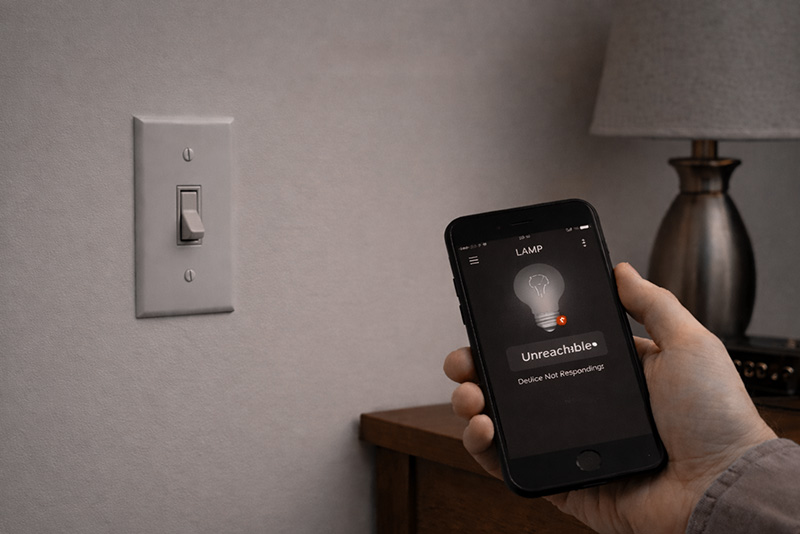
A smart bulb lamp stopped working because the wall switch got turned off.

Smart bulbs promise convenience.

You set them up.
You connect the app.
You create schedules and scenes.

And then someone flips the wall switch — and everything breaks.

If this has happened in your home, you’re not doing anything wrong. It’s a fundamental conflict between how smart bulbs work and how people actually use wall switches and lamps.


Smart Bulbs Need Constant Power

Smart bulbs rely on the electronic circuitry inside the bulb itself.

For those electronics to work, the bulb needs:

  • Continuous power at the outlet

  • An active connection to your WiFi network

  • A light bulb socket that is powered all the time

When someone flips the wall switch off, the bulb loses power entirely.

That means:

  • The app can’t find it

  • The WiFi connection breaks
  • Automations stop

  • Voice control fails

  • Schedules don’t run

The bulb isn’t just “off.”
It’s completely disconnected.

And it’s not just wall switches that can cause problems.

Smart bulbs can also stop working if someone turns the lamp’s own switch off.

Many lamps have rotary knobs or inline switches, and flipping those cuts power to the bulb just as completely as a wall switch does. Once that happens, the smart bulb goes offline, disappears from the app, and stops responding to schedules or voice commands.

From the user’s perspective, it feels random — but it’s the same underlying issue: smart bulbs can’t function without uninterrupted power.


Why This Is Especially Frustrating in Apartments

In apartments and single family homes:

  • Wall switches are still the primary way people expect lights to work

  • Guests, kids, and babysitters use switches instinctively

  • Switch-controlled outlets are common

Smart bulbs quietly assume:

  • Everyone knows not to touch the switch

  • Lighting is app-first

  • Physical controls are secondary

That assumption doesn’t match real life.


The Guest Problem Nobody Talks About

One of the biggest issues with smart bulbs has nothing to do with technology.

It’s usability.

If someone has to be told:

“Don’t use the wall switch — use the app instead”

…the system is already fragile.

Guests don’t want instructions.
Babysitters don’t want to use apps.
Family members don’t remember rules.
And on top of all that, you don’t want the security risks of everyone having access to your system.

Lighting should work the same way for everyone.


Why Smart Bulbs Feel Unreliable (Even When They Aren’t Broken)

From the user’s perspective, smart bulbs feel unreliable because:

  • Sometimes they respond

  • Sometimes they don’t respond

  • Sometimes the app works

  • Sometimes it says the device is offline

In reality, the bulb is behaving exactly as designed — it just wasn’t designed for normal wall-switch or lamp switch use.

That mismatch creates constant friction.


Why This Leads to Abandoned Smart Lighting

This is why so many people eventually:

  • Stop using the app

  • Disable smart features

  • Replace the bulbs altogether

The technology works — but the experience doesn’t.

Especially in shared homes and rentals, reliability beats novelty.


A Better Approach Starts With the Switch

Instead of fighting wall switches, a better lighting setup works with them.

That means:

  • Physical switch controls still matter

  • One action can be configured to affect multiple lights

  • Lighting controls should work even if the internet is down

  • Anyone should be able to use it

For many people, the simplest systems end up being the most dependable.


Smart Doesn’t Always Mean Better

Smart bulbs are impressive pieces of technology — but they aren’t always the right tool for the job.

If turning on a light requires:

  • Explaining how it works

  • Avoiding physical switches

  • Troubleshooting connectivity

  • Increasing home WiFi security risks

…it may be solving the wrong problem.

If you want lighting that works with wall switches instead of fighting them—without apps or WiFi—you can reserve PSYNQ for $1 and lock in the VIP $40 price (retail ~$60): presale.psynq.com

How to Synchronize Christmas Lights (Without Smart Plugs or WiFi)

A living room lit up with synchronized Christmas lights that all turn on and off together using PSYNQ.

Every December, the same problem comes back.

You decorate the house. You plug in the Christmas lights. Then you realize lighting control means plugging and unplugging multiple strands of lights every night. All the different Christmas lights scattered across different outlets — the tree in one place, window lights in another, decorations somewhere else entirely.

Wouldn’t it be nice if turning on one set of lights could automatically turn on the rest?

The good news: you can synchronize Christmas lights so they all turn on together — even if they’re plugged into different outlets, and even if you don’t have a switch-controlled outlet — without using smart plugs, cellphone apps, or WiFi. This works whether you use a wall switch, a normal always-on outlet, or simply plug in one set of lights to trigger the rest.


Why Christmas Lights Are So Annoying to Control

Most holiday lighting setups run into the same issues:

  • The outlet isn’t near a wall switch

  • Only one outlet is switch-controlled

  • Decorations are spread all across the room

  • Smart plugs require apps and WiFi

  • Timers don’t match your schedule

Holiday lighting should feel festive — not frustrating.


Why Smart Plugs Aren’t Always the Best Holiday Solution

Smart plugs are often suggested for Christmas lights, but they come with drawbacks:

  • They rely on WiFi

  • Require an app

  • They stop working if someone uses the wall switch

  • Add unnecessary network devices

For something as simple as turning on Christmas lights, that’s a lot of complexity.


The Simple Way: Let the Wall Switch Do the Work

Instead of making your lights “smart,” you can make your switch-controlled outlet smarter.

The idea is simple:

  • Use the switch-controlled outlet as a trigger

  • Place your Christmas lights wherever you want

  • Turn everything on and off with one physical wall switch

This works especially well for:

  • Christmas trees

  • Window lights

  • Mantle decorations

  • Tabletop holiday decor

  • Indoor light displays

Flip the switch when you enter the room — the lights come on.
Flip it off when you leave — all of your Christmas lights shut down.

No apps.
No WiFi.
No confusion.


You Don’t Even Need a Switch-Controlled Outlet

Here’s something that adds even more options to your lighting control:

You don’t need a switch-controlled outlet to synchronize Christmas lights.

If you plug a string of Christmas lights into a PSYNQ transmitter that’s plugged into a normal, always-on outlet, PSYNQ can sense when those lights turn on.

When it detects that electrical load, it sends a signal to one or more PSYNQ receivers—which instantly turn on the lights or decorations plugged into them.

That means:

  • Plugging in or turning on one set of Christmas lights can automatically turn on others

  • Decorations in different parts of the room can light up together

  • Everything feels coordinated, even without a wall switch

In practice, it feels simple:

You plug in the Christmas tree lights.
The window lights come on.
The mantle decorations light up.

All at once.

No apps.
No WiFi.
No smart plugs.
No setup every year.


Why This Works So Well for Holiday Decorating

Christmas decorations are rarely plugged into the “right” outlet.

They’re wherever the tree fits best.
On whichever window looks nicest.
Where the decorations feel balanced.

PSYNQ lets your lighting follow your decorating choices instead of your home wiring.

Once the holidays are over, the same setup can be used for lamps and everyday lighting—nothing gets packed away or wasted.


One Switch, Multiple Decorations

If you’ve ever wished you could turn on:

  • The Christmas tree

  • Window lights

  • A decorative lamp

  • Accent lighting

…all at once — this approach makes that possible.

It also means:

  • Kids can’t accidentally break the setup

  • Babysitters and houseguests don’t need special instructions

  • Everything works even if the internet is down


Holiday Lighting That Doesn’t Get Packed Away Forever

One of the best parts of using a PSYNQ-based solution is that it doesn’t stop being useful in January.

After the decorations come down, PSYNQ can be used for:

  • Lamps

  • Ambient lighting

  • Seasonal decor

  • Everyday room lighting

You’re not buying a product that only gets used a couple months a year.


Make Holiday Lighting Feel Effortless

Christmas lights should add warmth and joy — not extra steps to your day.

If you want your holiday lights to all turn on and off at the same time — without smart plugs, apps, or WiFi — PSYNQ was built for exactly that.

Reserve PSYNQ for $1 and lock in the VIP $40 price (retail ~$60) — and make controlling your holiday lights a breeze.: presale.psynq.com

When Simple Home Tech Lasts Longer Than Smart Home Systems

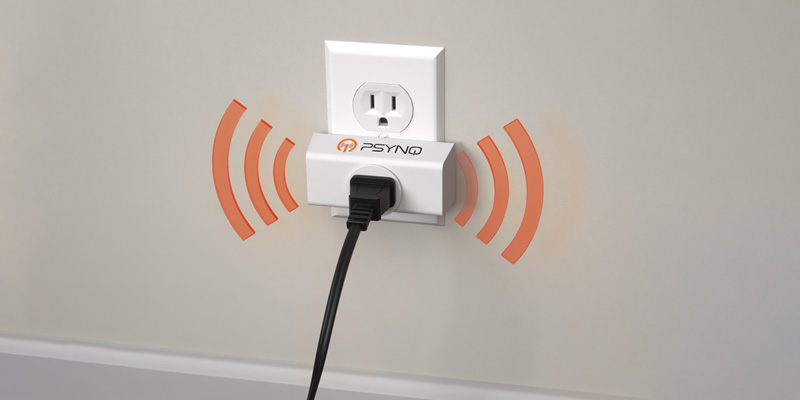
Photo of a PSYNQ controller plugged into a power outlet.

Smart home products promise a lot:

  • Convenience

  • Automation

  • Control from anywhere

  • A glimpse of the future

But if you’ve lived with smart home tech for a few years, you may have noticed a pattern:

The “smart” part doesn’t always age well.

Meanwhile, some of the most reliable things in our homes—light switches, lamps, outlets—keep working decade after decade.

There’s a reason for that.


Smart Home Systems Depend on a Lot of Things Going Right

Most smart home products rely on a chain of dependencies:

  • WiFi networks

  • Routers

  • Apps

  • Cloud services

  • User accounts

  • Firmware updates

  • Third-party servers

If any part of that chain breaks, the product often stops working as intended.

This isn’t a flaw in one specific brand—it’s a structural issue with how many smart systems are designed.


Apps Change Faster Than Homes Do

Homes last for decades.
Apartments last even longer.

Apps don’t.

Over time:

  • Apps get redesigned

  • Features get removed

  • Devices lose support

  • Companies pivot or shut down

  • Operating systems stop supporting older hardware

The result?
Perfectly functional hardware becomes frustrating—or unusable—not because it broke, but because the software ecosystem moved on.


Smart Home Obsolescence Creates Real Waste

When smart home products stop being supported, they often end up:

  • Sitting unused in a drawer

  • Tossed in a box during a move

  • Replaced by the “next generation”

  • Sent to landfills

This creates a cycle where electronics are discarded not due to physical failure, but because the ecosystem changed.

For something as basic as your home lighting, that’s a lot of unnecessary waste.


Simple Home Tech Ages Gracefully

Simple home technology has a different philosophy:

  • Fewer dependencies

  • No accounts

  • No apps

  • No cloud services

  • No firmware updates

  • No subscriptions

If it works today, it’s very likely to work years from now.

A lamp doesn’t stop working because your phone updated.
A wall switch doesn’t care if the internet is down.

That kind of longevity matters.


Longevity Is a Feature—Not a Compromise

There’s a misconception that simpler technology is “less advanced.”

In reality, it’s often more intentional.

Designing something to:

  • Work offline

  • Rely on physical controls

  • Avoid data collection

  • Resist obsolescence

…isn’t about avoiding progress.
It’s about choosing durability over novelty.


Simple Systems Are Better for Renters and Homeowners Alike

Whether you rent or own, long-lasting home tech offers real advantages:

  • Fewer things to reinstall when you move

  • No accounts to manage

  • No compatibility issues

  • No surprise failures

  • Fewer devices to replace

It’s technology that respects the fact that homes—and the people in them—change slowly.


Lighting Should Be Built to Last

For something as fundamental as lighting, reliability matters more than novelty.

Systems that:

  • Work with your home’s existing wiring

  • Function without WiFi

  • Don’t rely on apps

  • Remain useful for years

…don’t just feel better day-to-day.
They also reduce waste and avoid unnecessary upgrades.

If you’re looking for a lighting control solution designed to last—not become obsolete—reserve PSYNQ for $1 and lock in the VIP $40 price (retail ~$60): presale.psynq.com

Why Smart Bulbs Aren’t the Best Fix for Apartment Lighting

Apartment living room showing how smart bulbs can cause problems for apartment lighting.

On paper, smart bulbs sound like the perfect solution for apartment lighting:

  • No rewiring

  • App control

  • Schedules

  • Scenes

  • Automation

But if you’ve actually used smart bulbs in an apartment, you may have realized something pretty quickly:

They don’t solve the core problem—and often introduce new ones.

Here’s why smart bulbs usually aren’t the best fix for apartment lighting.


The Core Apartment Lighting Problem Isn’t the Bulb

Most apartment lighting problems come from one thing:

The wall switch controls the wrong outlet—or nothing at all.

Smart bulbs don’t fix that.

In fact, they often fight with it.

If someone flips the wall switch off, the smart bulb loses power—and suddenly:

  • The app stops working

  • Automations break

  • Voice control fails

  • Schedules don’t trigger

You end up with a “smart” system that only works if everyone remembers not to use the physical switch.

That’s not intuitive.
And it’s not renter-friendly.


Smart Bulbs Don’t Work Well for Guests, Babysitters, or Family

This is one of the biggest issues people don’t talk about.

Smart bulb systems assume that everyone using your home:

  • Has access to the smart bulb app and your WiFi network
  • Knows how your app works

  • Understands voice commands

  • Remembers not to touch the switch

But real homes have:

  • Houseguests

  • Babysitters

  • Grandparents

  • Kids

  • Pet sitters

None of them want a tutorial just to turn on a lamp.

If the lighting doesn’t work with a normal wall switch, it’s not truly usable.


WiFi-Dependent Lighting Creates Privacy and Security Risks

Most smart lighting systems rely on:

  • WiFi

  • Cloud services

  • User accounts

  • Third-party servers

That introduces real concerns:

  • Devices connected to your home network

  • Software updates you don’t control

  • Cloud services that can be shut down

  • Data you didn’t intend to share

  • Potential malicious access to your home network

For something as basic as turning on a lamp, that’s a lot of unnecessary exposure.

Especially in rentals, apartments, or shared homes, many people prefer lighting that:

  • Works locally

  • Doesn’t require internet access

  • Doesn’t collect data

  • Doesn’t depend on an app staying supported


Smart Bulbs Get Expensive—Fast

Outfitting an entire room with smart bulbs means:

  • Replacing every bulb

  • Matching bulb types and brands

  • Managing firmware updates

  • Dealing with failures one bulb at a time

And when you move?

You’re either:

  • Reinstalling everything

  • Re-pairing everything

  • Or leaving expensive bulbs behind

That’s a lot of complexity for a problem that started with a poorly placed outlet.


Lighting Should Work the Same Way for Everyone

Good lighting systems share a few important traits:

  • They work with your home’s existing wall switches

  • They don’t rely on WiFi

  • They don’t need accounts or apps

  • They’re intuitive for anyone

  • They work even if the internet is down

In apartments especially, lighting should feel boring in the best way possible—reliable, predictable, and simple.


A Simpler Approach Works Better in Apartments

Instead of making every bulb “smart,” it’s often better to:

  • Let the wall switch remain the main control

  • Redirect that control where you actually need it

  • Keep normal bulbs and normal lamps

  • Avoid WiFi and apps entirely

That approach solves the real problem—without creating new ones.

If you want to control multiple lamps from a wall switch without using smart bulbs,  cell phone apps, or WiFi, reserve your PSYNQ for $1 and lock in the $40 VIP price (retail ~$60): presale.psynq.com
Why I Created PSYNQ: A Simple Fix for an Overcomplicated Smart-Home World

Dimly lit couch with only one lamp on next to it.

I didn’t set out to reinvent lighting.
I just wanted my rooms to work the way I wanted them to.

But like most people, I kept running into the same problems that are the reasons why I created PSYNQ:

  • The wall switch controlled the wrong outlet

  • I couldn’t turn on lamps together

  • My furniture layout didn’t match the room’s wiring

  • Smart bulbs made everything more complicated

  • Every fix required rewiring or an app

At some point, I realized:
It shouldn’t be this hard to control a lamp.


Rooms Are Designed for Builders, Not for the People Who Live There

Older homes weren’t built with today’s lifestyles in mind.
Apartments don’t allow tenants to rewire their outlets.
Renters can’t change switches or outlets.
Smart-home lighting requires WiFi, accounts, firmware updates, and constant troubleshooting.

The more “smart” the solutions got, the more frustrating they became.

I wanted something different:

  • No rewiring

  • No WiFi

  • No apps

  • No accounts

  • No smart bulbs

  • No passwords
  • No electrician required

Just a simple way to decide which outlet the switch controls and make lighting feel consistent again.


PSYNQ Started as a Personal Fix

The idea wasn’t born in a lab.
It started in a normal home with normal lighting problems.

I wanted:

  • Multiple lamps to turn on together

  • My switches to control the outlets I chose

  • Flexibility to rearrange furniture

  • A solution that would work in any home, old or new

After trying smart bulbs, smart plugs, and wiring hacks, I still didn’t have a solution that felt right.

So PSYNQ began as a DIY workaround—a simple transmitter + receiver approach to “redirect” switch control to any outlet in the room.

It solved the problem immediately.


Then I Realized: Everyone Has This Problem

Friends. Family. Neighbors. Renters. Homeowners.
Every time someone walked into a room and flipped a switch that controlled nothing, they laughed and said:

“Oh my gosh — my house does this too.”

That’s when I knew PSYNQ wasn’t just for me.


Lighting Should Be Simple, Reliable, and Yours to Control

PSYNQ is intentionally low-tech:

  • No software

  • No login

  • No WiFi

  • No ecosystem to manage

  • No complicated setup

  • Works instantly

  • Works in apartments

  • Works in older homes

  • Works even if you rearrange the room

It puts you back in control of your lighting, not the builder who wired your home decades ago.


We’re Getting Close — And You Can Join Early

PSYNQ isn’t for sale yet, but early supporters can reserve:

A VIP price discount: $40 (retail ~$60) by placing a $1 deposit now at presale.psynq.com

If you’ve ever wished your lighting “just worked,” I built this for you.